Part 4: Pathways for German & European Players

Introduction: Many Doors, One Dream

Imagine Lena, a 16‑year‑old from Bavaria. Not yet national team, but consistent top finishes in regional and national junior events. She dreams of going to the U.S. to play college golf — but wonders: Which path fits me?
There’s no single “right route.” For German and European players, the U.S. college golf system is a landscape full of forks and options. If you’re a national‑level or near‑national player, you have a good shot. But even if you’re not yet at the very top, D2, NAIA, or JUCO pathways can bring you to your goal. This article maps the viable paths, practical steps, and what to lean into.
The Competitive Landscape: D1, D2, NAIA & JUCO Basics
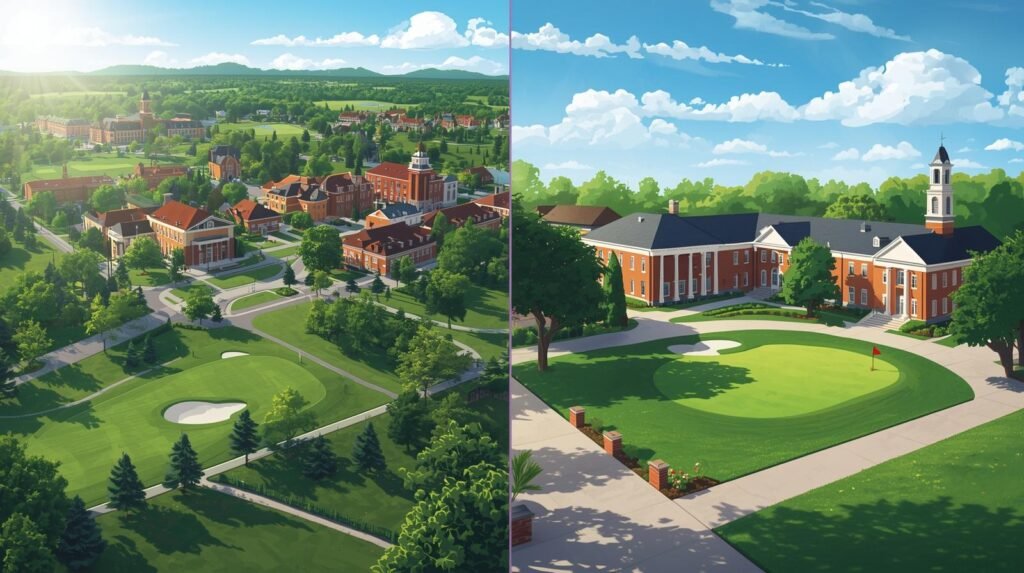
To pick your path, you need clarity on what each level offers and demands.
| Level | Resources & Depth | Competitive Intensity | Scholarship Potential |
|---|---|---|---|
| D1 | Highest funding, strongest teams, top facilities | Very intense | From 2025: no fixed scholarship limits; replaced by roster caps (8/9 per women’s Team). Coaches can distribute aid more flexibly within roster size. |
| D2 | Solid but smaller budgets, good balance | Strong but more room to grow | Up to 5.4 scholarships per team (divided among athletes) |
| NAIA | More flexibility, often smaller schools | Competitive, some crossover with D2 | Up to 5 scholarships per team |
| JUCO / NJCAA | Two-year institutions; often stepping stones | Varied (local, regional) | Up to 8 scholarships per team |
Note: In all these levels, women’s golf is an equivalency sport—coaches get a pool of scholarship money and divide it among athletes as they see fit. So full rides are rare; partial awards are more common.
Why D2 & NAIA can be better for many European recruits
- More opportunity to play early — less direct competition than in elite D1 rosters.
- Flexible scholarship balance — many coaches mix athletic and academic aid.
- Growth environment — you can develop physically, mentally, strategically over four years.
- Easier access — coaches in D2/NAIA often are more open to international players who show promise rather than perfect credentials.
JUCO remains a fallback or bridge: two years at a junior college (NJCAA) then transfer into D2/NAIA (or even D1) with improved visibility and stats.
Recruiting Timeline for International Players (Ages 15–18)
To avoid being late to the game, you need a timeline in mind.
- Summer after Sophomore Year (equivalent to grade 10/11 in Germany/Europe, age ~15–16): Start your outreach. Gather your tournament scores, rankings, videos.
- August before Junior Year (grade 11/12): Many coaches begin official campus visits; restricted or dead periods may apply in women’s golf.
- Junior Year (grade 11/12, around age 16–17): Intensify tournament schedule; follow up with coaches; narrow your list.
- Senior Year (final school year, grade 12/13 in Germany, age ~17–18): Final decisions, offers, visa preparations, commitment.
Rules differ between divisions: D2 and NAIA have somewhat looser restrictions on when you can contact coaches (versus D1’s tighter windows). Use that to your advantage.
Recruiting Timeline · Ages 15–18
A simple roadmap for German & European players: email coaches, build results, create video, secure eligibility & visa.
Build a short athlete profile and send first emails to coaches. Track results cleanly.
Email & ProfilePlay regional/national events. If not WAGR-ranked yet, add smaller events to enter WAGR.
Tournament PlanPublish a clean swing/short-game video; send periodic updates with results & ranking.
Video & Follow-upsFinalize offer, complete NCAA/NAIA eligibility, prepare F-1 visa (I-20, SEVIS) & travel.
Commit & VisaAcademic & Eligibility Essentials for German / European Players
Before a coach will consider you seriously, your academic eligibility must be in order.

NAIA side
- You must submit your transcripts to the NAIA Eligibility Center.
- International students submit credentials to InCred Evaluations, which converts foreign secondary school records into U.S. equivalency.
- You must meet your institution’s admission standards (same as non-athletes).
- NAIA limits athletic aid to actual cost of tuition, fees, books, room & board (as per institution’s catalog).
NCAA D2 side
- Register with the NCAA Eligibility Center (Core courses, GPA, test scores).
- Make sure your German/European high school curriculum meets the “core course” requirement.
- Submit translations, certified transcripts.
- Timelines matter: many deadlines fall in early senior year.
Ranking, Visibility & Tournament Strategy
Your performance and visibility are your currency. Coaches use several lenses to gauge you.
WAGR & EGR
- WAGR (World Amateur Golf Ranking): Many U.S. coaches use this as a benchmark. Events count differently depending on region, field strength, etc.
- EGR (European Golf Rankings): Particularly relevant for German/European players. Helps you compare locally and regionally.
Play WAGR‑counting events in Europe (Amateurs, national opens) to build a credible ranking. Use your EGR status to validate local strength.
Tournament planning
- Mix local, national, international events, and if possible include one or two tournaments in the U.S. (often winter events are a good fit).
- If you are not yet WAGR ranked, start with smaller events to collect results and gain a chance to enter the ranking. Once you are ranked, prioritize tournaments with stronger fields and higher ranking weight.
- Don’t overload your schedule — quality over quantity.
- Latest 20–30 rounds / scoring average
- Strength of schedule & tournament field
- Ranking trajectory (WAGR / EGR)
- Video that shows full swing + short game
- Academic metrics (GPA, test scores)
- Character, coachability, improvement curve
Three Advancement Paths (D2 & NAIA, with JUCO fallback)
Here are four realistic tracks to the U.S. college golf system. Especially relevant for players who are not yet on the national team, not ranked inside the top 1000 of the WAGR, or who not average 74 strokes per round or better. Pick the one that best matches your starting point and goals.
- Direct to D2
If your national/European results are strong and your academic grades solid, you can go directly into a D2 program. You’ll likely receive a partial athletic scholarship, supplemented by academic aid. - NAIA Growth Route
For many European players, NAIA offers earlier playing time, more flexible budgets, and openness to international athletes. It’s a fertile ground to develop your skills and showcase yourself—then possibly transfer upward. - JUCO → Transfer
If your profile isn’t yet strong for 4‑year offers, two years at a junior college (NJCAA) can help. You compete, improve, collect stats, and then transfer to D2 or NAIA (or even D1) later.
Building a Recruitable Profile: Steps & Checklists (for Germany / Europe)
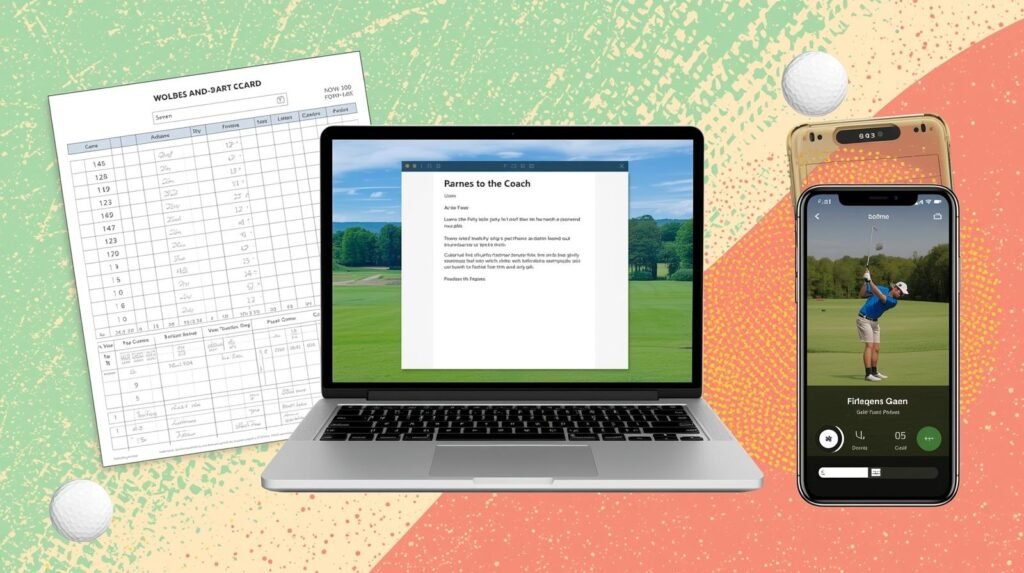
You can’t leave your profile to chance. Here’s a structured guide to build a package that coaches will notice. Still, for many players it is highly recommended to work with an agency or recruiting service. Well‑established market leaders in Germany and Europe include companies like Uniexperts, Athletes USA, Collegesportsamerica, Innergreen, and Scholarbook. They can help connect you with coaches, prepare documents, and streamline the process.
Score & Performance Targets
- Aim for consistent rounds within a benchmark: for many top D2/NAIA programs, that’s around +2 to +4 (depending on course difficulty) or equivalent.
- Show upward trends, not just “flashes.”
Tournament Planning
- At least a mix: regional, national, a few international (WAGR‑counting) events.
- Balance rest, school, travel.
Video & Data Profile
- Produce a clean video: full swing, face on/down the line, short game, putting.
- Use shot tracking / analytics (if available) and include shot dispersion, stats.
- Host on a stable platform (YouTube, private link) with password, coach access.
Outreach & Follow‑ups
- Research 20–30 target colleges (D2 & NAIA) that align with your scores / interests.
- Initial email: brief intro, best recent performance, link to video & profile, grades.
- Follow up after 4–6 weeks with updates (recent tournaments, ranking changes).
- Be courteous, persistent, but not pushy.
Scholarship Reality & Financials (D2 & NAIA)

Now, here we hint at what to expect — full detail comes in Part 5.
- D2 women’s golf teams can offer up to 5.4 equivalency scholarships per team.
- NAIA teams: up to 5 scholarships per team.
- Because these are equivalency sports, most scholarships are partial, not full.
- The total aid you get may combine: athletic + academic + need‑based support.
- When coaches propose aid, it often covers portion of tuition/fees and maybe housing, but not always all components.
- D2: 5.4 equivalency, heavier competition, more academic demands
- NAIA: 5 equivalency, more flexibility, quicker playing time
Note: In the summary boxes and snapshots here, we’ll hint at scholarship ranges; in the next article, we’ll unpack them in full detail — you’ll see real case examples, formulas, and sample offers.
Parental Support: Do’s & Don’ts
Parents are essential, but it’s a narrow balance between support and interference.

✅ Do’s (Support Checklist)
- Help with logistics: travel, school coordination, test registration
- Encourage consistency — in training, academics, communication
- Be sounding board — ask “What’s your plan?” — don’t dictate
- Help track deadlines (transcripts, eligibility, visas)
- Discuss options rationally — not emotionally
❌ Don’ts (Pitfalls to avoid)
- Don’t pressure or micromanage every move
- Don’t let emotions override rational comparisons of offers
- Don’t ignore academics — grades matter heavily
- Don’t delay visa / admin tasks (they often take longer than you’d expect)
Conclusion
German and European players have multiple doors into U.S. college golf: through D2, NAIA, JUCO, or developmental paths. This article outlined the strengths of each route, the recruiting timeline, academic and eligibility basics, and the importance of building a strong, visible profile. With checklists, agency options, and guidance on tournaments and outreach, you now have a practical roadmap to approach the process with confidence.