Part 1: College Golf in the USA: A Guide for Young Female Players and Their Families


For many talented junior golfers, the United States is the land of opportunity. College golf offers a unique combination of world-class training, academic education, and unforgettable experiences on and off the course. For young female players in Germany and across Europe, this path can open doors to college golf scholarships in the USA, international competition, and even professional golf. But how does the system work, and what should families know before considering this step?

Why College Golf in the U.S. is so Attractive
Unlike most European countries, the U.S. has built a strong sports culture within its universities. College golf teams often train like professionals, with access to excellent coaches, fitness facilities, and competitive schedules. At the same time, student-athletes are able to earn a degree while playing at a very high level.
For female players, opportunities are particularly strong. Thanks to Title IX, U.S. universities must provide equal athletic opportunities for women and men. This means that women’s golf teams often have generous scholarship opportunities and well-structured programs.

The Structure of College Golf
College golf is organized into different associations and divisions. The most important are:
- NCAA Division I The highest level of college golf, featuring big universities, professional-level facilities, and extremely competitive teams. Division I players often compete against future LPGA Tour professionals. Scholarships can cover tuition, housing, meals, and more.
- NCAA Division II Still very competitive, but often with smaller universities and a better balance between academics and athletics. Scholarships are available, though usually a mix of athletic and academic support.
- NCAA Division III Focuses more on academics, as athletic scholarships are not offered here. However, talented players can still receive academic or need-based aid. For families who value education first but still want competitive golf, this is a great option.
- NAIA (National Association of Intercollegiate Athletics) Smaller schools outside of the NCAA system. NAIA programs can be very strong and flexible when it comes to scholarships and recruiting international students.
- Junior Colleges (NJCAA) Two-year colleges where players can start their journey before transferring to a four-year university. This path can be especially useful for athletes who need time to improve academically or athletically before moving up.
Pathways for German and European Players
Each year, dozens of young women from Germany and other European countries move to the U.S. to play college golf. The recruiting process usually starts around ages 15–17, when players begin communicating with coaches, building their athletic résumés, and collecting tournament results.

For those not yet at the national team level, there are still many opportunities. Coaches at smaller Division I schools, Division II, or NAIA often look for dedicated players who can develop during their college years. Even if a player isn’t currently among the top in Germany, with hard work and motivation, she can still earn a spot on a college team.
Scholarships – A First Overview
One of the biggest advantages of college golf is the possibility of receiving a women’s golf scholarship in the USA. These can range from full scholarships (covering tuition, housing, meals, books, and sometimes even equipment) to partial scholarships, where costs are shared between the athlete and the university.
In addition to athletic scholarships, many universities also offer academic scholarships for strong grades or standardized test scores. For international students, combining athletic and academic support can significantly reduce overall costs.
While the exact process can be complex (and will be covered in more detail in another article), it’s important to know that scholarships are real, accessible, and often more generous in women’s golf than in men’s sports.
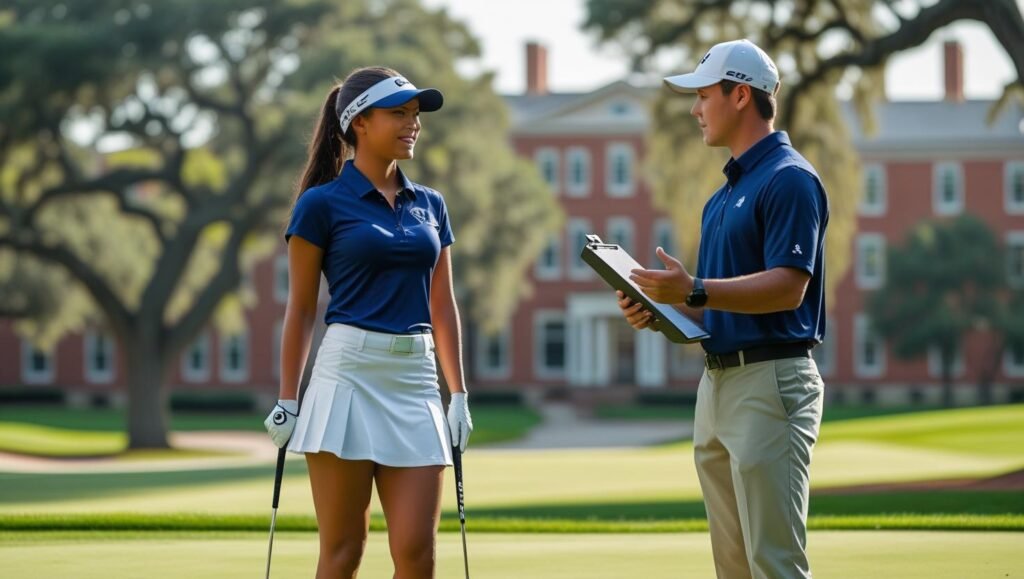
What Makes Women’s College Golf Special
For female golfers, the U.S. system offers unique advantages:
- High scholarship availability due to Title IX
- Strong competition at both national and international levels
- Visibility: Many LPGA players, including those from Germany, started their careers in college golf
- Balance: The chance to combine academics and sports in a way that is rare in Europe
A great example is Polly Mack, a German player who played college golf in the U.S. before turning professional and joining the LPGA Tour. Stories like hers show that the college route is not just about education—it can also be a stepping stone to the highest level of the game.
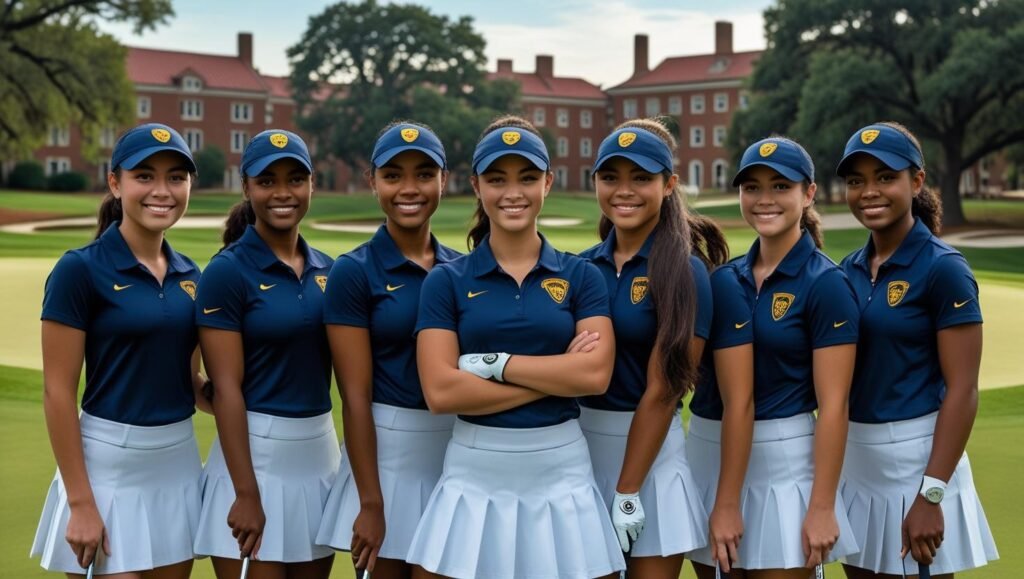
First Steps for Interested Players
If you are a junior golfer—or the parent of one—and curious about college golf, here are a few first steps to consider:
- Assess your current level: Regular tournament play, national rankings, and your World Amateur Golf Ranking (WAGR) are important for coaches.
- Build a résumé: Include tournament scores, handicap, WAGR status, and academic achievements.
- Start early: Coaches begin recruiting as early as age 15–16.
- Improve your English: Good communication skills are key, and language tests (like TOEFL or IELTS) are often required.
- Stay open-minded: The best fit might not be the biggest school, but the one that supports your development on and off the course.

Conclusion
College golf in the U.S. is more than just sport—it’s an opportunity to grow as an athlete, a student, and a person. For young female players in Germany and across Europe, it represents a unique pathway to combine education and high-level competition, while gaining international experience and friendships for life.
Whether your dream is to play professional golf or to simply enjoy the game while earning a degree, the American college system has something to offer. With motivation, planning, and the right mindset, the journey from Europe to the U.S. fairways can be an exciting and life-changing adventure.